


Diet significantly affects the health and composition of the gut microbiome.
Recently, there has been a lot of talk around high protein diets and their impact on gut health.
High-protein diets may specifically have a negative impact on gut health. However, it appears there are several dietary strategies that can help protect your gut health while following a high-protein diet.
These include:
- Maintaining a high fibre intake.
- Having a diverse range of plant foods in your diet.
- Limiting fat intake to <40% of caloric intake.
- Moderating intake of red and processed meats.
The Research – “The Korean Study”
One study published in 2019 compared faecal microbiota characteristics amongst bodybuilders, distance runners and a control group of sedentary men.
They assessed the relationship between the gut microbiome and body composition, athlete type and dietary intake.
The results suggested that high-protein diets may have a negative impact on gut microbiota diversity and function for athletes.
In the table below, you can see the dietary intake summary of all three of the study cohorts.
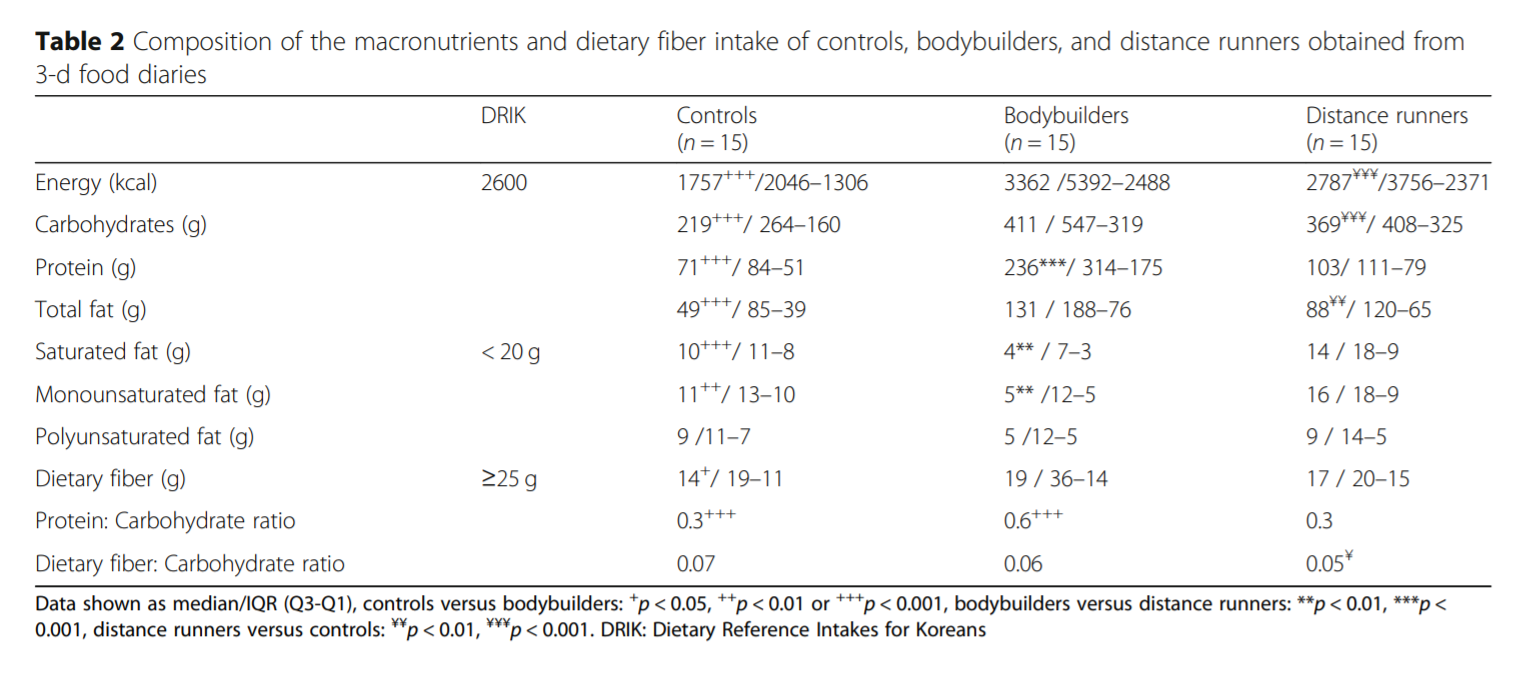
The only thing that the bodybuilders and distance runners really had in common was a low dietary fibre intake (between 14-19g per day on average). This is significantly below the 25-30g generally recommended for adult men.
Protein intake, on the other hand, varied drastically among the groups. The control group was consuming an average of 71g of protein per day, while the bodybuilders were consuming an average of 236g.
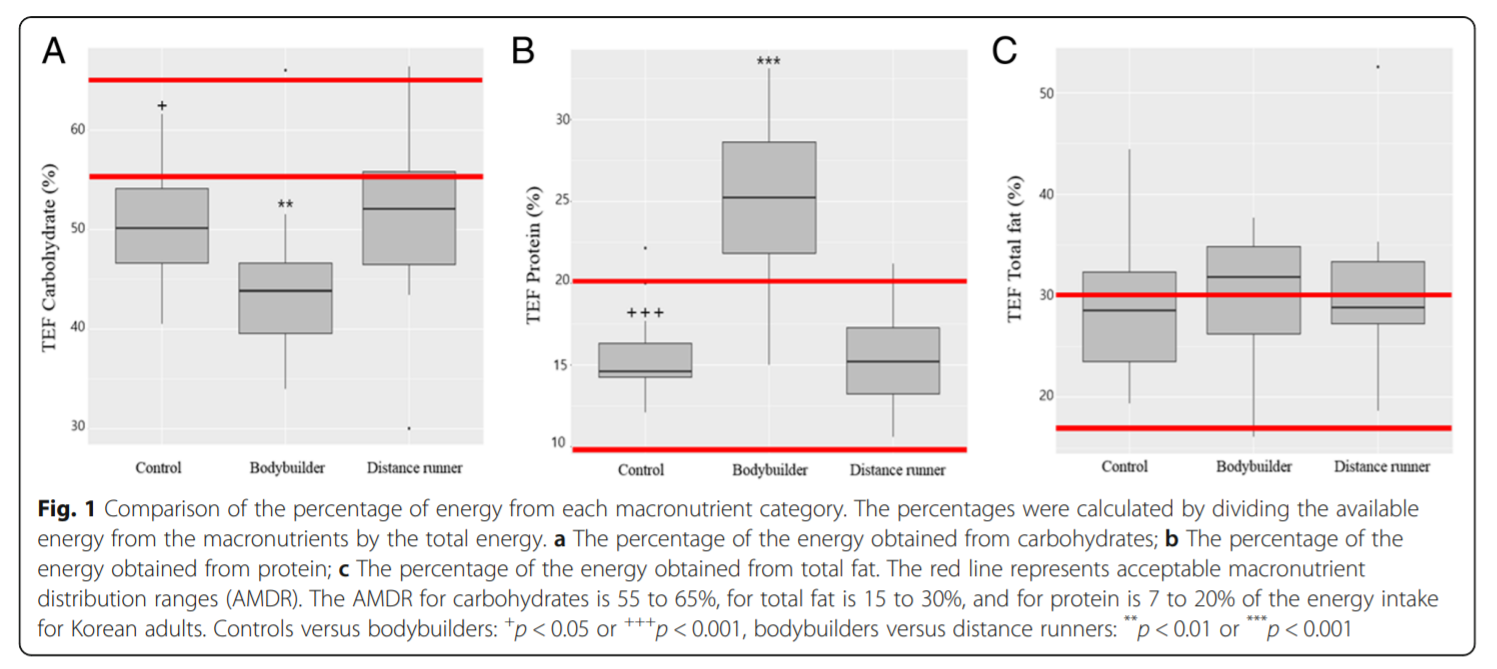
Moreover, the study consistently refers to the bodybuilders’ intake as high-protein, low-carb, and high-fat. However, I wouldn’t call 411g of carbohydrates per day low-carb. In comparison to the runners and control group, the bodybuilders consumed a lower percentage of their calories from carbs, with a much higher percentage coming from protein.
The study also found a general reduction in bacteria among bodybuilders that produce short-chain fatty acids, which are well-known for their positive role in gut health. This could be due to the high protein-to-carbohydrate ratio combined with a low intake of dietary fibre.
Furthermore, daily protein intake was negatively correlated with gut microbiome diversity in distance runners. This suggests that a high protein intake may negatively impact gut microbiota diversity in athletes who consume lower amounts of carbohydrates and dietary fibre.
So Should You Have A Low to Moderate Protein Diet?
Not necessarily.
The results of the above study and everything else we know about gut health suggest that inadequate intake of carbohydrates and dietary fibre in combination with a high protein intake is what should be avoided.
It is not really clear what constitutes enough carbohydrates and fibre to balance out a high protein intake though.
Even in the Korean study, >40% of calories were coming from carbohydrates amongst bodybuilders which isn’t exactly a low intake. Perhaps it has more to do with the protein-to-carbohydrate ratio. It would be helpful to see more research in this area.
Having adequate fibre in your diet is one of the factors most strongly correlated with gut microbiome diversity. So, perhaps pairing a higher-protein diet with sufficient fibre could help offset the negative effects of protein consumption on the gut.

Clarke et al. (2014) reported that as protein intake in rugby athletes increased, the gut microbiota diversity also increased. So a higher protein intake does not always have to have a negative impact on gut health.
The biggest difference between the diets of the rugby athletes and the bodybuilders and runners in the Korean study was that the rugby athletes had higher carbohydrate and fiber intake, likely protecting them from the potential effects of a high-protein diet.
The health effects of increased protein fermentation are not entirely clear, but high-protein, low-carbohydrate, and low-fiber diets are likely harmful to the gut microbiome. In contrast, high-protein diets with adequate carbohydrate and fiber intake are likely beneficial for gut health, or at least neutral.
So If You Have A High Protein Diet You Should Probably…
Get Adequate Fibre
There are two general recommendations for dietary fibre intake. The first is to have 25-30g of fibre daily for adults. This would be the bare minimum recommendation.
The second is to have 12-15g fibre per 1000 kcals. This recommendation takes into account a wide range of calorie intakes amongst adults.
It could be argued that those with a higher calorie and protein intake should have more fibre to ‘balance things out.’
This isn’t something that is clear in the research currently. But I would bet on there being a benefit to scaling up fibre intake with calorie/protein intake.
Steer Clear of Low Carb, High Fat Diets
As discussed, the gut microbiome may benefit from scaling up carbohydrate intake with protein intake. So it would make sense that a lower carbohydrate, higher fat diet be avoided when protein intake is high.
Dr. Gabriel Fundaro is a researcher in this space. One of her recommendations is to limit dietary fat intake to <40% of total daily calories.
She also recommends limiting saturated fat intake to <10% of calories and focusing on getting adequate omega-3 fatty acids.

Focus On Plant Diversity
The American Gut Project found that people who consumed 30 or more plant-based foods per week had a more diverse gut microbiome. In comparison to those who had 10 or fewer per week.
Having a range of plant-based foods in your diet would be a great way to safeguard your gut health.
For tips on this, see our blog post dedicated to gut health.
Limit High-Fat Red & Processed Meat Products
A reduction in bifidobacteria was observed in the Korean study amongst the bodybuilders.
Bodybuilders are notorious for having a diet very heavy in animal products. This allows them to efficiently meet their high protein requirements for recovery and muscle growth.

However, it is also likely contributing to reductions in overall gut health.
It could be recommended that those undertaking this sort of high protein diet rich in animal foods opt for leaner cuts of meat and limit consumption of high-fat red meat and processed meats.
They would also likely benefit from having a mix of animal and plant-based protein sources. Something that bodybuilders and strength athletes don’t often do. This would also assist with fibre intake and plant diversity in one’s diet.
Key-Takeaway
Abundant proteolytic fermentation generates an array of compounds that may cause inflammation and be detrimental to the gut. However, increased fibre fermentation and short-chain fatty acid production appear to be protective against this, even when protein fermentation products are abundant.
For those who are on a high protein diet, for long-term gut health, there should at least be a focus on adequate fibre, a higher carbohydrate diet & high plant food diversity.
